Marissa DuBois in Slow Motion Full Fashion Week 2023, Fashion Channel Vlog,

Showing posts with label Defense forces. Show all posts

Sunday, August 7, 2011

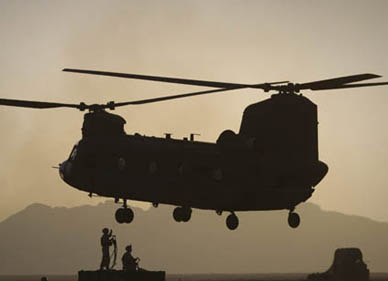
US helicopter shot down in Afghanistan was on rescue mission

KABUL, Afghanistan — The 30 U.S. soldiers, many of them Navy SEALs, who died Saturday in the U.S. military's single biggest loss of the Afghan war, were operating in a Taliban-controlled valley where frequent U.S.-led night raids have won the insurgents popular support, area residents said Sunday.
The raids occur "every night. We are very much miserable," said Roshanak Wardak, a doctor and a former member of the national Parliament. "They are coming to our houses at night."
Wardak runs a clinic about 3 miles from the rugged Tangi Valley where insurgents early Saturday shot down a helicopter carrying the U.S. troops, an Afghan translator and seven Afghan commandoes.
Night raids have become a significant part of the U.S. strategy aimed at weakening the insurgents and compelling their leaders to accept U.S. and Afghan government offers to hold talks on a political settlement of the decade-old war.
The Taliban have suffered heavy losses in the operations, which have soared since last year to an average of 340 per month, according to a Western intelligence official, who requested anonymity in order to discuss the issue.
There has been no apparent progress toward convening peace talks, but U.S. commanders defend the raids as effective in eliminating and capturing insurgents, and gaining intelligence that leads to other militants and arms caches.
"Eight-five percent are shots not fired, when you're talking about night raids and disruption," said the Western intelligence official. "Over 50 percent of the time they hit the target that they're after, which shows the intelligence has been accurate."
Afghan commandoes participate in all such operations, he added.
The tactic, however, has proven highly controversial with ordinary Afghans amid charges that they claim civilian lives. President Hamid Karzai has demanded that they stop.
Residents of the Tangi Valley area, in eastern Wardak Province, about 60 miles southwest of Kabul, issued similar complaints about the night raids in their vicinity, charging that they have killed civilians, disrupted their lives and fueled popular support for the Taliban.
"There are night raids every day or every other day," said a second doctor who asked not to be identified because he feared for his safety. He said he lives about 100 yards from the parched riverbed where the U.S. Chinook helicopter crashed.

Thirty Americans and eight Afghans were killed in the crash, making it the deadliest single loss for U.S. forces in the decade-long war in Afghanistan. The rangers, special operations forces who work regularly with the Seals, afterwards secured the crash site in the Tangi Joy Zarin area of Wardak province, about 60 miles (97km) southwest of Kabul, an official said.

On Sunday, Nato began an operation to recover the remains of the large transport helicopter, while Afghan and American forces battled insurgents in the region of the crash. The clashes Sunday did not appear to involve the troops around the crash site.

"There have been a small number of limited engagements in the same district as yesterday's helicopter crash, however those clashes have not been in the direct vicinity of the crash site," NATO said in a statement. "As of now, we have no reporting to indicate any coalition casualties resulting from these engagements."

Shahidullah Shahid, the Wardak provincial spokesman, confirmed the helicopter recovery mission was under way and said there were reports of Taliban casualties overnight.

"There is a joint operation going on by Afghan and Nato forces. A clearing operation is ongoing in the district and there are reports of casualties among insurgents," Shahid said. "The area is still surrounded by American forces."

Elsewhere in Afghanistan, Nato said insurgents killed four alliance service members in two separate attacks in the east and the south. It did not provide their nationalities or any other details.

The deaths bring to 369 the number of coalition troops killed this year in Afghanistan and 46 this month.

The downing of the helicopter Saturday was heavy setback for the US-led coalition as it begins to draw down thousands of combat troops fighting what has become an increasingly costly and unpopular war.

Of the 30 Americans killed, there were 22 Navy Seals, three Air Force combat controllers and a dog handler, his dog and four crew members, a current US official and a former official said on condition of anonymity because military officials were still notifying the families of the dead.

Most of the Seals belonged to the same elite unit that killed Osama bin Laden, although they were not the same people who participated in the May raid into Pakistan that killed the al-Qaida leader. The downing was a stinging blow to the lauded, tight-knit Seal Team 6, months after its crowning achievement.

Saturday, August 6, 2011

Copter Downed by Taliban; Elite U.S. Unit Among Dead

LONDON — Prime Minister David Cameron paid tribute to the US and Afghan troops killed when Taliban insurgents shot down their helicopter in Afghanistan on Saturday.
"I was deeply saddened to hear of the many US military personnel who lost their lives today in Afghanistan. My thoughts -- and the thoughts of the whole country -- are with their families and friends," Cameron said in a statement.
Thirty-one US and seven Afghan special forces died, officials said, in the biggest single loss yet for foreign troops in a decade-long war.
The death toll was given by Afghan President Hamid Karzai's office but it was not immediately confirmed by the NATO-led International Security Assistance Force (ISAF).
"They have made the ultimate sacrifice in helping to protect our security, and to build a more stable and peaceful Afghanistan. We remember too the Afghan troops who died alongside them today," Cameron said.
"Britain, and our own armed forces serving in Afghanistan, will continue to work steadfastly alongside their US and Afghan colleagues as they help prepare Afghanistan to secure its own territory."
Britain has about 9,500 troops in Afghanistan, making it the second-largest contributor to ISAF after the United States. Cameron wants all British troops out of a combat role in Afghanistan by 2015.
The helicopter incident came the day after a British marine was killed in Afghanistan in an insurgent grenade attack on his checkpoint, the 30th British soldier involved in the campaign to die this year.

The helicopter, on a night-raid mission in the Tangi Valley of Wardak Province, to the west of Kabul, was most likely brought down by a rocket-propelled grenade, one coalition official said.

The Taliban claimed responsibility for the attack, and they could hardly have found a more valuable target: American officials said that 22 of the dead were Navy Seal commandos, including members of Seal Team 6. Other commandos from that team conducted the raid in Abbottabad, Pakistan, that killed Bin Laden in May. The officials said that those who were killed Saturday were not involved in the Pakistan mission.

President Obama offered his condolences to the families of the Americans and Afghans who died in the attack. “Their death is a reminder of the extraordinary sacrifice made by the men and women of our military and their families,” Mr. Obama said. President Hamid Karzai of Afghanistan also offered his condolences to the victims’ families.

Saturday’s attack came during a surge of violence that has accompanied the beginning of a drawdown of American and NATO troops, and it showed how deeply entrenched the insurgency remains even far from its main strongholds in southern Afghanistan and along the Afghan-Pakistani border in the east. American soldiers had recently turned over the sole combat outpost in the Tangi Valley to Afghans.

Gen. Abdul Qayum Baqizoy, the police chief of Wardak, said the attack occurred around 1 a.m. Saturday after an assault on a Taliban compound in the village of Jaw-e-Mekh Zareen in the Tangi Valley. The fighting lasted at least two hours, the general said.

A spokesman for the Taliban, Zabiullah Mujahid, confirmed that insurgents had been gathering at the compound, adding that eight of them had been killed in the fighting.

The Tangi Valley traverses the border between Wardak and Logar Province, an area where security has worsened over the past two years, bringing the insurgency closer to the capital, Kabul. It is one of several inaccessible areas that have become havens for insurgents, according to operations and intelligence officers with the Fourth Brigade Combat Team, 10th Mountain Division, which patrols the area. The mountainous region, with its steeply pitched hillsides and arid shale, laced by small footpaths and byways, has long been an area that the Taliban have used to move between Logar and Wardak, local government officials said.

Officers at a forward operating base near the valley described Tangi as one of the most troubled areas in Logar and Wardak Provinces.

“There’s a lot happening in Tangi,” said Capt. Kirstin Massey, 31, the assistant intelligence officer for Fourth Brigade Combat Team in an interview last week. “It’s a stronghold for the Taliban.”

The fighters are entirely Afghans and almost all local residents, Captain Massey said, noting that “We don’t capture any fighters who are non-Afghans.”

The redoubts in these areas pose the kind of problems the military faced last year in similarly remote areas of Kunar Province, forcing commanders to weigh the mission’s value given the cost in soldiers’ lives and dollars spent in places where the vast majority of the insurgents are local residents who resent both the NATO presence and the Afghan government.

Local officials in Wardak said that residents of the Tangi Valley disliked the fighting in the area, and that though they had fallen under the Taliban’s sway, the residents were not willing allies.

“They do not like having military in that area — no matter whether they are Taliban or foreigners,” said Hajji Mohammad Hazrat Janan, the chairman of the Wardak provincial council. “When an operation takes place in their village,” he said, “their sleep gets disrupted by the noise of helicopters and by their military operation. And also they don’t like the Taliban, because when they attack, then they go and seek cover in their village, and they are threatened by the Taliban.”

However, when local residents are hurt by the NATO soldiers, then, he said, they are willing to help the insurgents.

This was the second helicopter to be shot down by insurgents in the past two weeks. On July 25, a Chinook was shot down in Kunar Province, injuring two people on board. Of 15 crashes or forced landings this year, those two were the only confirmed cases where hostile fire was involved.

Before Saturday, the biggest single-day loss of life for the American military in Afghanistan came on June 28, 2005, during an operation in Kunar Province when a Chinook helicopter carrying Special Operations troops was shot down as it tried to provide reinforcements to forces trapped in heavy fighting. Sixteen members of a Special Operations unit were killed in the crash, and three more were killed in fighting on the ground.

Although the number of civilian deaths in Afghanistan has steadily risen in the past year, with a 15 percent increase in the first half of 2011 over the same period last year, NATO deaths had been declining — decreasing 20 percent in the first six months of 2011 compared with 2010.

Two dozen U.S. deaths in Afghan copter crash

Nato helicopter crashed overnight in east Afghanistan following an operation against Taliban insurgents.

Afghan provincial spokesman Shahidullah Shahid said the helicopter crashed in the Sayd Abad district of Wardak province. The volatile region borders the province of Kabul where the Afghan capital is located and is known for its strong Taliban presence.

Nato said the alliance was conducting a recovery operation Saturday at the site and investigating the cause of the crash, but did not release details or a casualty figure.

"We are aware of an incident involving a helicopter in eastern Afghanistan," said US Air Force Captain Justin Brockhoff, a Nato spokesman. "We are in the process of accessing the facts."

Nato said insurgents were in the area at the time of the crash.

Taliban spokesman Zabiullah Mujahid claimed the downed aircraft was a US military helicopter and that the Taliban fighters had brought it down with a rocket attack.

The Taliban claimed militants downed the helicopter with a rocket-propelled grenade. Mohammad Hazrat Janan, head of the provincial council said Tangi village elders reported that insurgents shot at the craft when it was flying back from an operation.
The incident took place in the eastern province of Wardak, an area rife with insurgent activity. There has been a swell of recent attacks in the country's southern and eastern provinces.
The crash comes just as NATO is drawing down and handing over security control to national forces. Ten thousand U.S. soldiers are scheduled to depart by year's end, while the full drawn-down is expected to take place by the end of 2014.
However, NATO's International Security Assistance Force has not said how the incident occurred. ISAF spokesman Justin Brockhoff confirmed the crash and acknowledged the helicopter had been flying in area where there was reported insurgent activity, but declined to offer additional details.
Officials are being especially tight-lipped because recovery operations at the site are still under way and body identifications and family notifications are just beginning, the U.S. military official said.
Last month, a NATO helicopter was brought down by insurgent fire in the country's eastern province of Kunar. The Taliban also claimed responsibility for that attack, though no injuries were reported.
In a separate incident, a NATO service member died Saturday after an improvised explosive device detonated in southern Afghanistan.
Elsewhere Saturday, a joint Afghan and coalition force conducted raids in the eastern province of Nangarhar, killing "several insurgents," NATO reported.
The operation also targeted a "Taliban facilitator," who NATO says was responsible for supplying ammunition and bomb-making materials to the Taliban.
In July, a series of gun battles in Nangarhar between insurgents and NATO forces left at least 10 militants dead.